

We are three decades and thirty climate summits into the global response to climate change. The science has never been clearer, the warnings never louder, the solutions never more affordable. Yet trust in the transition is fraying.
The fight against climate breakdown hinges on two questions: can we move fast enough, and can we do so in a way that feels fair and improves people’s lives in ways they can actually feel? On both counts, business will be as decisive as any government.
Today we are failing the first test. Global emissions are still rising, and current policies point toward roughly 2.6 degrees of warming, far beyond what any stable society or economy can tolerate.
Governments announce climate pledges while licensing new oil and gas. Renewables attract twice as much investment as fossil fuels, yet fossil production keeps climbing. Capital continues to flow in both directions at once. This is the contradiction of our time, we are accelerating and braking at the same time. The first signs of structural transition are emerging, but not yet at structural scale.
Delay is no longer measured in abstract curves on a chart. It is measured in failed harvests, flooded cities, collapsing health systems, and families pushed deeper into poverty. Yet we still treat climate mainly as technical or financial exercise, a puzzle of molecules, megawatts, and investment models.
But this is not just an environmental or economic story. It is a story about health, affordability, jobs, security, food, water, and clean air. No agenda built around gigatonnes and gigawatts will survive while citizens are struggling with energy bills, food prices, and housing costs. That is the kitchen-table test. And we are failing it.
COP30 in Belém is taking place against this backdrop. To matter, it must become the moment when we stopped admiring the problem and started delivering solutions at scale, when we recast climate not as an emergency for experts but as a global project of human development and societal evolution.
So, what do we need from this COP?
First, a real fossil transition that lowers bills, cleans air, and strengthens energy security. This requires a mandate to wind down fossil fuels in line with 1.5 degrees.
Governments still spend around seven trillion dollars a year propping up fossil fuels, enough to fund a second global health system. These subsidies keep households trapped in volatile markets that spike energy bills, pollute the air our children breathe, and undermine national security. A genuine transition is how we stabilise costs, clean up our towns and cities, improve health and life expectancy, and build an energy system that is cheaper and more reliable.
Second, fair and predictable finance that protects vulnerable communities in developing nations and shields households in developed ones.
Tripling adaptation finance for developing countries by 2030 to roughly 120 billion dollars a year is the floor. This is not charity, it is risk management for an interconnected world. When climate disasters hit developing countries, the effects spill across boarders: higher food prices, disrupted supply chains, new health risks, and migration pressures land directly in the politics and household budgets of richer nations. A coherent financial architecture is how we stop global instability from showing up in supermarket prices, insurance premiums, and public spending at home.
Third, forest protection and land use at the centre. Halting and reversing deforestation by 2030 must become a formal, monitored process starting in Belém. The world is still on track to lose or degrade an area the size of the UK every year. When forests fall, rainfall patterns shift, food prices rise, rivers shrink, and extreme weather intensifies.
Protecting forests is a large part of how we safeguard food supplies, stabilise water systems, and prevent the kinds of climate-driven shocks that ultimately hit national and household budgets.
None of this can be delivered by the governments meeting in COP alone. If the test is how this transition feels in people’s lives, then we have to ask who actually shapes those lives day to day; not just governments, but businesses.
The private sector influences the choices we make every day in the real economy. And it drives innovation and scale to create the markets of tomorrow. It shapes wages and working conditions, supply chains and supermarket shelves, energy and food systems, housing markets and healthcare access, and increasingly the flow of information that shapes how we understand the world.
If the transition feels fair and hopeful, business will be at the centre of that story. If it feels unfair and extractive, business will be at the centre of that too.
So, business cannot afford to view the transition solely as an economic or technological shift. The case for climate action is now proven on human terms as well as economic and environmental ones.
This is an enormous responsibility, and also the greatest opportunity the private sector has seen in our lifetimes: a chance to redefine its purpose, from extracting value to creating it, from managing risk inside a fragile system to helping redesign the system itself.
This is what a new social contract for business looks like, what we call a Net Positive approach. To take responsibility for your full impact on people and planet. To give more than you take across your operations, supply chains, investments, and influence. To measure success not only by quarterly results, but also by whether communities, ecosystems, and future generations are better off because your business exists.
For leaders reading this, the question is simple: are you creating value by solving the world’s problems, or profiting from creating them?
After a decade of ambitious pledges since Paris, credibility now depends on delivery, verification, and implementation. Ambition is meaningless without action, and trust will collapse if delivery does not follow.
This transition will be won or lost not in technical annexes, but in the lived reality of ordinary people, their jobs, their bills, their health, and their sense of security. If it works for them, it will endure. If it does not, the backlash will make progress impossible.
Business now has a choice: to cling to an old story of extraction, or to step forward as essential architects of a more resilient, just, and humane global economy.
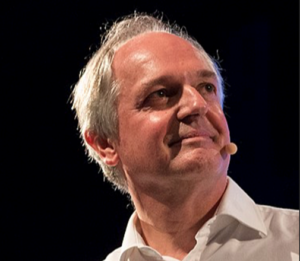
Paul Polman